“I have come to believe over and over again that what is most important to me must be spoken, made verbal and shared, even at the risk of having it bruised or misunderstood.”
Audre Lorde
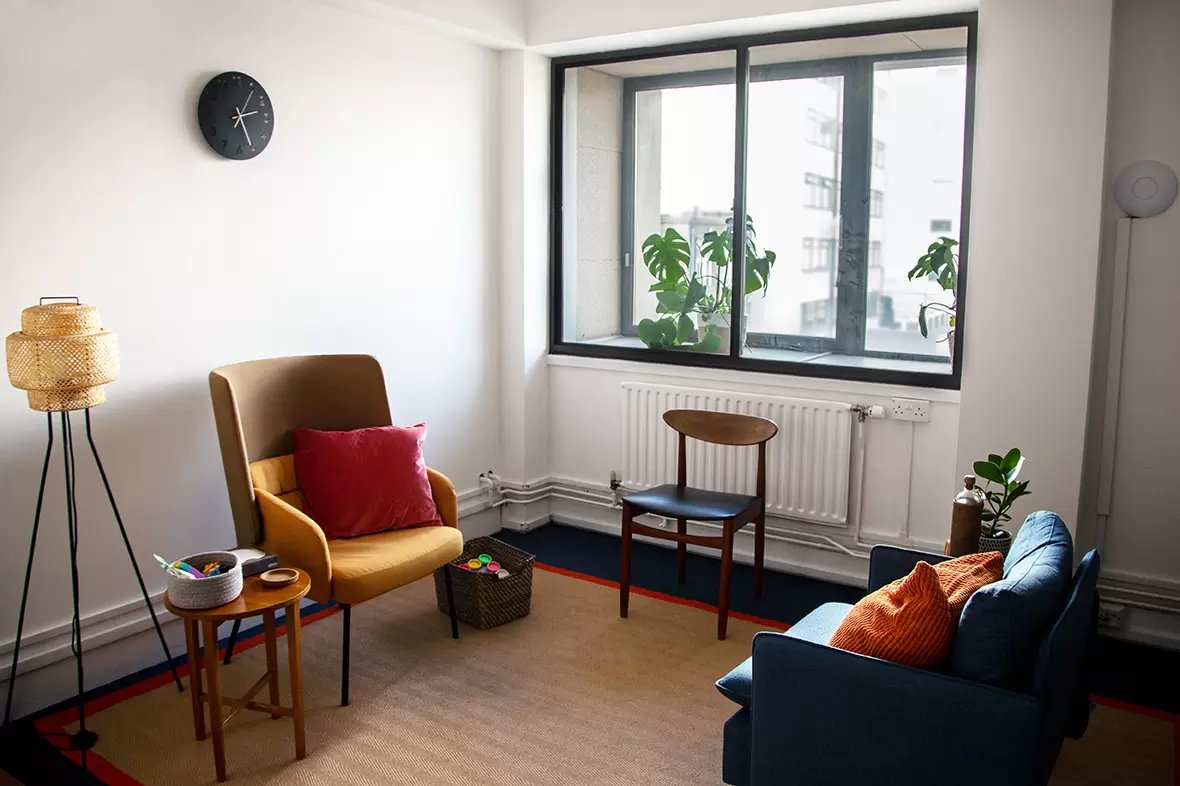
Sessions will be held in one of the rooms at the Brighthelm Centre in Brighton. This will be short term or long term once a week, whatever best fits your needs. Short term work can be ideal for focusing on a specific area in your life, perhaps something that is coming up a lot for you in the present. Long term work is usually suited for unpacking deeper issues, such as trauma, healing from abuse, working with mood disorders or life long conditions. Healing from trauma or abuse requires emphasis on building trust, safety and consistency in the therapeutic relationship and this will help model a secure way of relating and regulating the nervous system.
I’m aware that just because someone declares an environment as ‘safe’, it doesn’t automatically mean this is true. The feeling of safety comes over time and it is up to the client to decide if they feel safe. I encourage the person in front of me to explore what safety feels like for them and it is my hope that I can create a trusting relationship where we both feel secure.
I use a Humanistic and Person Centred approach and I am Existentially informed. I work in a way that’s client led and based on the idea that people have their own unique way of seeing the world, and that they can lead more fulfilling lives by being their true selves. I know first hand how daunting meeting a new therapist can be, and so I will welcome you with warmth and help put you at ease as best I can. I also realise that not all therapists are a good fit. I encourage you to find someone who feels right for you, and to not be afraid to walk away if it doesn’t. Boundaries are a part of therapy, and exercising our decision to say ‘No’ or ‘Yes’ to something is healing in its self.
Sometimes talking out loud is not enough to express our experience; incorporating a more somatic way of working can be helpful as our bodies are intwined with our minds. The body is intelligent; often the body knows something before the mind does, and if we’re not connected to our bodies, we might miss the messages and signals it’s sending to us, which can eventually result in chronic pain, illness or injuries. In the case of trauma, coming back to the body can be frightening, so this will be led in a way that feels comfortable for the person. None of this is required either - some people prefer to just focus on talking therapy as this feels more appropriate.
I have previously worked with students and young people, especially those who are neurodivergent or come from disadvantaged backgrounds. I also have a background in literature and creative writing, where I was able to express myself and explore my own narrative through writing about the things that haunted me in order to process and release them. My work with young people has highlighted just how much of an impact our early life can affect us in the present. Therapy can be an ideal place to explore how your childhood might still be showing up for you. The majority of our conditioning and scripts are formed in our developing years and it is usually during adulthood that we start to unlearn and surrender what no longer serves us. What we carry over into adulthood deserves a space to be witnessed without judgement and then confronted, so we can step into the person we want to be and no longer stuck in a past version of ourselves.
“Pain is important: how we evade it, how we succumb to it, how we deal with it, how we transcend it.”
Audre Lorde